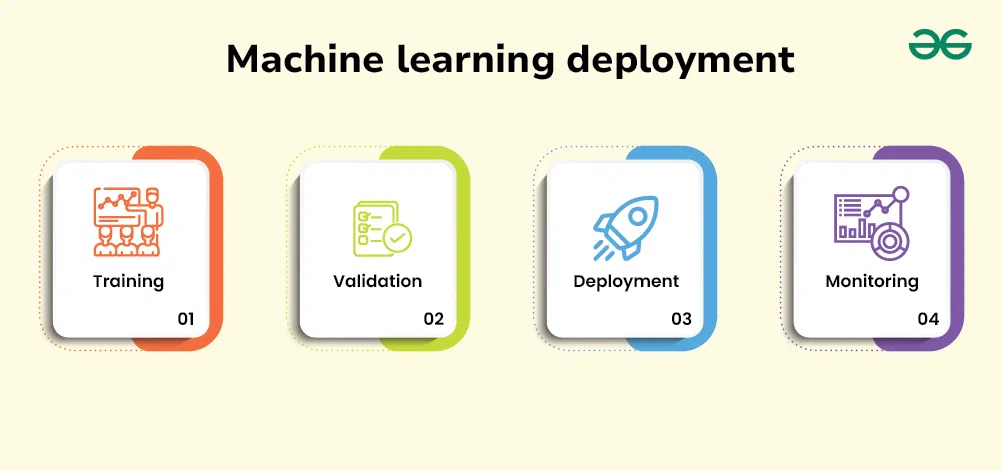
The landscape of machine learning (ML) has evolved significantly, with models becoming more complex and resource-intensive. Scaling these models efficiently is crucial to ensuring they can handle the demands of real-world applications. Here, we briefly explore advanced tools and techniques for deploying scalable ML models. It is recommended that data science professionals who seek to upskill and stay up-to-date enrol for a course that imparts hands-on training on the use of these tools and techniques. Enrol in a professional-level data course in Chennai, Bangalore, Hyderabad or any such technical learning centre that offers such courses.
Containerization with Docker and Kubernetes
Docker
Docker is a powerful tool that encapsulates applications in containers, ensuring consistent environments across development, testing, and production stages. Containers are lightweight and include everything needed to run an application, making them ideal for ML model deployment.
Key Benefits:
- Portability: Docker containers can run on any system with Docker installed, regardless of the underlying hardware or operating system.
- Isolation: Each container runs in isolation, ensuring that dependencies do not conflict with one another.
- Scalability: Containers can be easily replicated and scaled horizontally to handle increased loads.
Kubernetes
Kubernetes, an open-source orchestration platform, automates the deployment, scaling, and management of containerized applications. It handles the complexities of scaling containers across multiple machines, ensuring high availability and efficient resource utilisation.
Key Benefits:
- Automated Scaling: Kubernetes can automatically adjust the number of running containers based on demand, ensuring optimal performance.
- Self-Healing: Kubernetes can automatically replace or restart containers that fail or become unresponsive.
- Service Discovery and Load Balancing: It provides built-in service discovery and load balancing, simplifying network management.
Distributed Computing with Apache Spark
Apache Spark is a powerful open-source engine designed for distributed data processing. It is highly effective for scaling ML models, particularly when dealing with large datasets. With the volume of data that professional data analysts need to handle increasing by the day, completing a Data Science Course that covers Apache Spark is a great career-building option for data professionals.
Key Features:
- In-Memory Computing: Spark processes data in memory, significantly speeding up computation times.
- Scalability: It can scale horizontally across many nodes, handling terabytes of data with ease.
- Integrated MLlib: Spark includes MLlib, a library for scalable machine learning algorithms, making it a comprehensive tool for both data processing and model training.
Model Serving with TensorFlow Serving
TensorFlow Serving is a flexible, high-performance serving system specifically designed for deploying machine learning models in production environments. A domain-specific course tailored for production engineers will usually have coverage on TensorFlow usage in data analytics.
Key Features:
- Multiple Model Versions: TensorFlow Serving can handle multiple versions of a model, allowing for seamless updates and rollbacks.
- High Throughput and Low Latency: It is optimised for high throughput and low latency, making it suitable for real-time applications.
- Flexible Deployment: It supports deployment on various platforms, including on-premises, cloud, and edge devices.
Auto-scaling with AWS SageMaker
Amazon Web Services (AWS) SageMaker is a comprehensive service that provides every developer and data scientist with the ability to build, train, and deploy machine learning models quickly. Advanced courses in data technologies, such as a Data Science Course in Chennai that focuses on ML modelling, will include training on using AWS SageMaker.
Key Features:
- Managed Infrastructure: SageMaker manages the underlying infrastructure, allowing developers to focus on model development.
- Automatic Scaling: SageMaker can automatically scale the number of instances based on the traffic to the deployed models.
- Integration with AWS Ecosystem: It integrates seamlessly with other AWS services, enabling a smooth end-to-end machine learning workflow.
Continuous Integration and Deployment (CI/CD)
Implementing CI/CD pipelines is crucial for automating the deployment of ML models, ensuring that updates and new models are deployed efficiently and reliably.
Key Features:
- Automation: CI/CD pipelines automate the process of testing and deploying code changes, reducing manual errors.
- Continuous Monitoring: These pipelines provide continuous monitoring and logging, helping to detect and resolve issues quickly.
- Version Control: CI/CD systems maintain a history of model versions and configurations, facilitating easy rollback to previous states if needed.
Edge Deployment with TensorFlow Lite
TensorFlow Lite is a lightweight version of TensorFlow designed for mobile and edge devices. It allows for deploying ML models directly on devices, reducing latency and dependency on network connectivity.
Key Features:
- Reduced Model Size: TensorFlow Lite optimizes model size and performance for resource-constrained environments.
- Cross-Platform Compatibility: It supports a wide range of devices, including Android, iOS, and embedded systems.
- Real-Time Processing: By deploying models on the edge, TensorFlow Lite enables real-time processing and decision-making.
Conclusion
Scaling machine learning models involves leveraging advanced tools and techniques to ensure they perform efficiently under varying loads and environments. By utilising containerization with Docker and Kubernetes, distributed computing with Apache Spark, model serving with TensorFlow Serving, auto-scaling with AWS SageMaker, CI/CD pipelines, and edge deployment with TensorFlow Lite, organisations can deploy robust, scalable ML models capable of handling real-world demands. Learning these technologies and practices by enrolling for an advanced Data Science Course will equip data professionals with the ability to implement efficient and reliable machine learning applications.
BUSINESS DETAILS:
NAME: ExcelR- Data Science, Data Analyst, Business Analyst Course Training Chennai
ADDRESS: 857, Poonamallee High Rd, Kilpauk, Chennai, Tamil Nadu 600010
Phone: 8591364838
Email- enquiry@excelr.com
WORKING HOURS: MON-SAT [10AM-7PM]