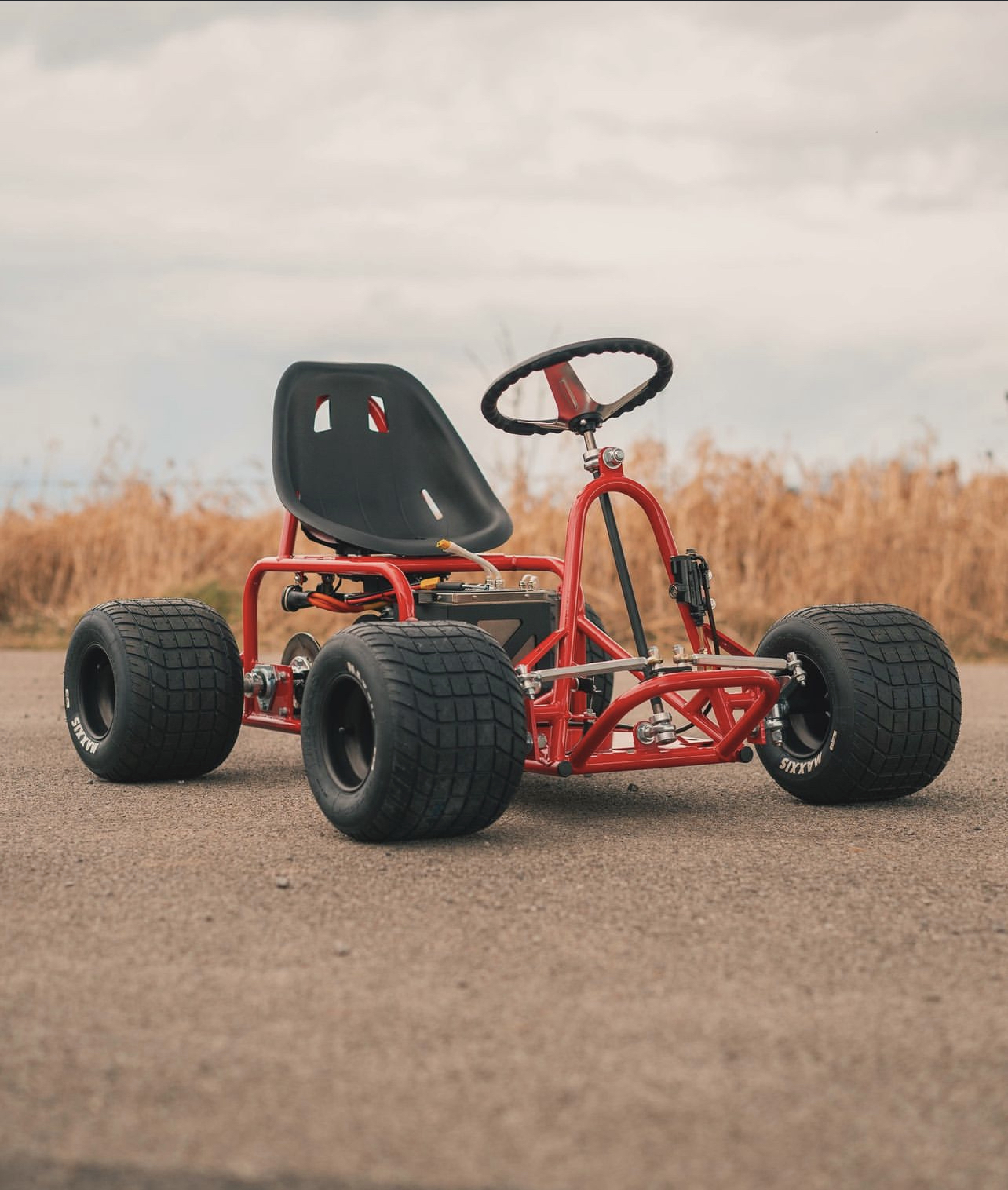
The world of motorsports is filled with thrilling pursuits, but few deliver the immediate, accessible, and sheer joy of a drifting go kart. This unique machine transforms the classic concept of go-karting from a grip-focused race into a smoky, sideways ballet. A drifting go kart is not a simple modification; it is a purpose-built vehicle designed from the ground up to break traction and slide predictably. The experience of piloting one is a visceral dance with physics, offering a taste of professional drifting at a fraction of the cost and complexity, making it an increasingly popular hobby for enthusiasts of all ages.
Engineering for the Slide: What Makes it Different
The fundamental difference between a standard racing go kart and a drifting go kart lies in its rear traction, or deliberate lack thereof. While a traditional kart is engineered for maximum grip and cornering speed, a drifting go kart is designed to lose its rear grip with ease. This is achieved through a simple yet brilliant innovation: hard plastic sleeves that fit over the rear tires. Typically made from low-friction materials like UHMW or PVC, these sleeves drastically reduce the contact patch’s adhesion to the pavement. This allows the rear end to slide out predictably at relatively low speeds. The front of the kart, however, retains one or two standard pneumatic tires to maintain precise steering and braking control. The chassis is often lower and the frame more minimalist than a racing kart, emphasizing a low center of gravity for stability during slides. Power can come from gravity, electric motors, or small gasoline engines, but the core principle remains the same—the rear wheels are designed to slip, not grip.
The Art of Control: Mastering the Drift
Driving a drifting go kart is a skill that feels counter-intuitive at first but becomes instinctual with practice. The primary technique is counter-steering. As you approach a corner, you initiate the slide by turning in and using a quick steering flick, a tug on a handbrake, or a burst of throttle. The moment the rear end steps out, you must immediately turn the front wheels in the direction of the slide. If the kart is sliding to the right, you steer to the right. This action fights the kart’s natural tendency to spin out and keeps it moving forward in a controlled slide. Throttle control is equally critical; too much power will cause a full spin, while too little will straighten the kart out. Your body becomes an active part of the controls as well. Leaning into the turn or shifting your weight to the outside wheel helps balance the kart and extend the drift. Mastering this delicate balance of steering, throttle, and body English is the key to linking corners together in a continuous, graceful arc of motion.
The Spectrum of Drifting Machines
The world of drifting go karts is wonderfully diverse, catering to different budgets and preferences. The most basic form is the gravity-powered kart. These lightweight, often homemade machines rely solely on a sloping hill for momentum. They offer a pure, mechanical form of drifting that emphasizes skill and finesse over horsepower. For those seeking more power and versatility, gas-powered karts are the classic choice. Fitted with robust engines, often from 50cc to over 200cc, these karts provide the consistent thrust needed for sustained drifts on flat ground, making them perfect for parking lots or dedicated tracks. The modern evolution is the electric drifting go kart. Utilizing hub motors or chain drives, these karts deliver instant, silent torque, allowing for incredibly precise power modulation. They are environmentally friendly, quiet enough for urban use, and offer a uniquely smooth and responsive drifting experience that is rapidly gaining popularity.
A Thriving and Inclusive Community
A significant part of the appeal of drifting go karts is the vibrant community that surrounds it. The hobby is far more accessible than car drifting, both financially and logistically. This low barrier to entry has fostered a grassroots culture of collaboration and shared passion. Enthusiasts gather online in forums and social media groups to share custom fabrication techniques, troubleshoot mechanical issues, and post videos of their latest drifting exploits. Local meet-ups are common, where pilots of all skill levels come together to ride, learn, and socialize. It is a hobby that transcends age, bringing together teenagers, families, and adults who share a common love for the thrill of the slide, creating a supportive and inclusive environment unlike any other in motorsports.
Gearing Up for Safe Sideways Action
The exhilarating nature of drifting a go kart comes with inherent risks that must be managed with proper safety gear and practices. A full-face helmet is the single most important piece of equipment, protecting your head and face in the event of a spin-out or collision. Sturdy gloves, long-sleeved clothing, long pants, and closed-toe shoes are essential to protect against abrasions from the pavement. For added safety, knee and elbow pads are highly recommended. Equally important is choosing the right environment. A drifting go kart should only be operated in a controlled, safe area such as an empty private parking lot, a closed course, or a designated track. Always ensure the area is clear of public traffic, pedestrians, and obstacles.
In conclusion, the drifting go kart represents a perfect fusion of mechanical simplicity and driving thrill. It offers an unparalleled opportunity to learn vehicle dynamics and master the art of drifting in its most elemental form. From the DIY builder crafting their first frame to the seasoned pilot linking perfect smoky circles, the drifting go kart provides a direct, unfiltered connection between driver and machine. It is a testament to the fact that in motorsports, sometimes the most rewarding path is not the straightest line, but the one that goes spectacularly sideways.