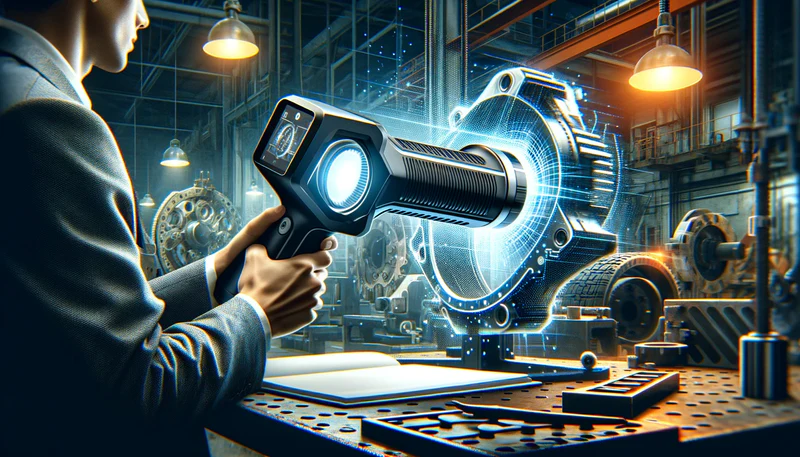
In recent years, the technology behind 3D scanning has evolved significantly, allowing for the development of handheld 3D scanner that are portable, user-friendly, and versatile. These devices have transformed various industries, including manufacturing, healthcare, art, and archaeology, by providing a quick and efficient means to capture the physical world in digital form. This article delves into the features, applications, and benefits of handheld 3D scanners, providing insights into their growing popularity.
What is a Handheld 3D Scanner?
A handheld 3D scanner is a portable device that captures the shape and appearance of real-world objects using laser or structured light technology. Unlike traditional 3D scanners that require a fixed setup, handheld scanners allow users to move around the object while scanning, making them ideal for capturing larger items or those located in hard-to-reach places. The scanned data is then processed using specialized software to create a digital 3D model.
Key Features of Handheld 3D Scanners
- Portability: One of the most significant advantages of handheld 3D scanners is their portability. Users can easily carry them to various locations, making them suitable for fieldwork and on-site scanning.
- User-Friendly Interface: Many modern handheld scanners come equipped with intuitive interfaces that allow users to operate them with minimal training. This accessibility broadens their use across various industries and skill levels.
- High Accuracy and Resolution: Handheld 3D scanners can capture intricate details with impressive accuracy. Depending on the model, some can achieve resolutions as fine as 0.1 mm, ensuring that the digital representation closely matches the original object.
- Versatile Scanning Modes: Most handheld scanners offer multiple scanning modes, including single object scanning, large area scanning, and even full-body scanning. This versatility enables users to adapt the device to their specific needs.
- Real-Time Visualization: Many handheld scanners provide real-time feedback, allowing users to see the scanned data as they capture it. This feature is invaluable for ensuring complete coverage and identifying any missed areas during the scanning process.
Applications of Handheld 3D Scanners
- Manufacturing and Quality Control: In manufacturing, handheld 3D scanners are used to create accurate digital models of components for quality assurance. By comparing the scanned model with the original CAD design, manufacturers can quickly identify defects or deviations, ensuring high-quality production standards.
- Healthcare and Prosthetics: In the healthcare sector, handheld scanners are utilized for creating custom prosthetics and orthotics. By accurately capturing the shape of a patient’s limb, healthcare professionals can design personalized solutions that enhance comfort and functionality.
- Art and Heritage Preservation: Museums and artists use handheld 3D scanners to digitize artworks and historical artifacts. This process not only helps in preserving cultural heritage but also enables the creation of replicas for display or study without risking damage to the original piece.
- Virtual Reality and Gaming: The gaming industry increasingly employs handheld 3D scanners to create lifelike models of characters and environments. By capturing real-world objects, developers can enhance the realism of virtual worlds, providing players with immersive experiences.
- Education and Research: In educational settings, handheld 3D scanners facilitate interactive learning experiences. Students can scan objects for projects, enabling them to explore 3D modeling and printing technologies hands-on.
Benefits of Using Handheld 3D Scanners
- Efficiency: Handheld 3D scanners significantly reduce the time and effort required to create digital models. This efficiency is particularly beneficial in industries where rapid prototyping is essential.
- Cost-Effective: While the initial investment in a handheld 3D scanner may be substantial, the long-term savings from reduced labor costs and increased productivity can justify the expense.
- Enhanced Collaboration: The ability to create and share digital models fosters collaboration among team members. Designers, engineers, and clients can easily review and discuss 3D representations, leading to better decision-making.
- Improved Accuracy: Handheld 3D scanners minimize human error, ensuring that the digital models are precise and reliable. This accuracy is crucial in applications where small discrepancies can lead to significant issues.
Conclusion
Handheld 3D scanners are revolutionizing the way we capture and utilize three-dimensional data. With their portability, ease of use, and versatility, these devices are making significant inroads into various industries. As technology continues to advance, we can expect further enhancements in accuracy, speed, and functionality, solidifying the role of handheld 3D scanners as indispensable tools for professionals and enthusiasts alike. Whether for manufacturing, healthcare, art, or education, handheld 3D scanners are paving the way for innovative solutions and creative possibilities in the digital age.